ClearanceAI was founded to give regulated industries the independent AI evaluation that internal tools and self-assessments cannot provide. Every evaluation we produce is a third-party record — not a self-report, not a vendor's own testing, and not a checkbox exercise.
We evaluate AI tools against FDA 2025 AI Guidance, NIST AI RMF, ISO 42001, CMS requirements, and DoD AI Ethics Principles — delivering a formal 9-section compliance assessment report with a scored readiness verdict.
Think of us as the Ernst and Young of AI model evaluation — an independent third-party assessment your hospital, bank, or government client can rely on before signing a contract.
● Regulatory Clause Mapped● Credentialed Expert Reviewed● SHA-256 Anchored at Delivery● No Client Data Used for Training
FDA QMSR 2026ISO 13485IEC 62304ISO 14971NIST AI RMFSaMDDesign AssuranceAI System ValidationGE HealthcareJ&J
Built by someone who has spent two decades making sure regulated products don't reach the market until the evidence says they're ready.
NR Koka founded ClearanceAI after 20+ years working in design assurance and regulatory compliance — first in medical devices, where the consequences of deploying something before it's ready are measured in patient outcomes, then in AI systems, where the same discipline is largely absent.
That career spanned FDA QMSR 2026, ISO 13485, IEC 62304, ISO 14971, and NIST AI RMF across product development lifecycles at GE Healthcare and J&J. The work was not advisory. It was the sign-off layer — the function that determined whether documented evidence was sufficient to proceed, and that said no when it wasn't.
"AI is being deployed into hospitals, banks, and defense systems the same way early medical devices were — with internal testing, genuine belief the product works, and no independent record that anyone outside the organization ever verified it."
ClearanceAI applies the same standard that has governed regulated product development for decades — independent assessment, documented evidence, formal verdict — to AI models before they ship into regulated environments.
Every report carries NR Koka's review before delivery. That is what "human in the loop" means at ClearanceAI — not a checkbox, but a professional sign-off from someone whose career has been defined by that decision.
Rajeev has spent over 15 years working across AI, medical device engineering, and regulatory compliance. He led engineering on an AI-enabled cancer detection platform that received FDA Breakthrough Device designation, and worked as a Technical Assessor at BSI, reviewing Class IIa/IIb medical devices and software as a medical device under EU MDR and UK MDR.
He's a certified Lead Auditor for ISO 42001 (AI Management Systems) and ISO 27001 (Information Security). His background covers AI governance, SaMD architecture, verification and validation, and regulatory work under FDA and EU MDR frameworks.
At ClearanceAI, he advises on evaluation methodology and human review processes as part of the company's accreditation roadmap.
ISO 42001 Lead AuditorISO 27001 Lead AuditorBSI Technical AssessorEU MDRUK MDRFDA Breakthrough DeviceSaMDAI Governance
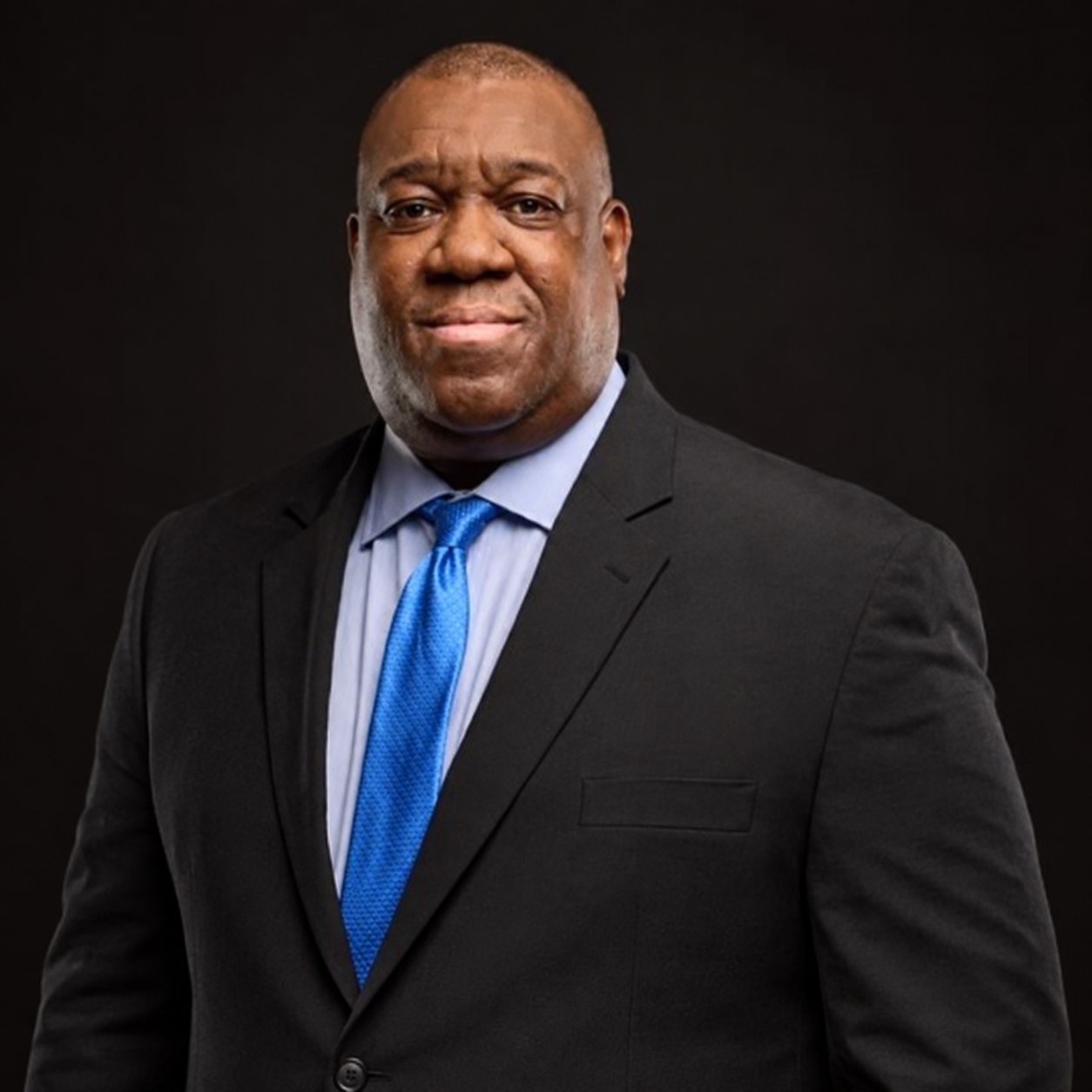
James Monroe is a Fellow of the Regulatory Affairs Professionals Society (FRAPS) — the highest designation in regulatory affairs — with 25+ years of global medical device regulatory expertise. As CEO of Global RQC Med Device Solutions LLC, he has led AI/ML regulatory programs at Zeiss Meditec AG and Cleerly Inc., managing FDA 510(k) clearances for CADe and CADx AI SaMD devices.
He holds an ISO 13485:2016 Lead Auditor certification, CQA designation, and an Applied Data Science Certificate from MIT. As ClearanceAI's Lead Expert Reviewer, James independently reviews and signs off on the Expert Reviewer Findings section of every Layer 2 Compliance Assessment Report.
FRAPSRACCQAISO 13485 Lead AuditorAI/ML SaMDFDA 510(k)Cleerly Inc.Zeiss Meditec AGMIT Data Science
// Why ClearanceAI Exists
The gap internal governance tools don't close.
AI adoption in regulated industries is accelerating faster than the compliance infrastructure around it. That creates a specific, solvable problem — and it's the same problem the financial industry solved with external auditors decades ago.
📈
AI is moving faster than internal verification can keep up
FDA's 2025 AI Guidance, NIST AI RMF 1.0, and ISO 42001 represent a new category of regulatory expectation. Most Tier 2 and Tier 3 companies do not have internal teams with the depth to evaluate against these frameworks rigorously — and the frameworks themselves require evidence, not assertions.
🔍
Internal governance tools are self-reported by definition
The AI governance platforms on the market — Credo AI, Monitaur, Fiddler — are internal tools that help organizations document their own compliance. They do not produce independent third-party assessments. When a hospital's legal team asks for independent validation, a self-assessment does not satisfy the question.
Hospital CIOs, bank compliance committees, and government procurement teams increasingly require AI vendors to produce third-party documentation before a contract can proceed. Without it, deals stall — not because the AI is unsafe, but because the evidence doesn't exist.
🛡️
The liability question doesn't go away without a record
When an AI model causes a patient harm, a wrongful denial, or a mission failure, the first question is: who verified this was safe to deploy, and what did the verification look like? A ClearanceAI report is a dated, evidence-anchored record that this question was asked — and answered — before deployment.
"The Ernst and Young of AI model evaluation — an independent professional assessment your regulators, legal team, and board can rely on."
// Our Approach
Three layers. One verdict.
Every ClearanceAI evaluation runs three distinct layers before a report is issued. No layer is optional. The verdict is a function of all three.
01
⚡ Automated Evaluation Engine — Layer 01
A structured battery of 50+ test prompts runs against the AI model across eight categories: hallucination rate, adversarial input handling, edge case behavior, output consistency, demographic performance parity, regulatory clause alignment, safety refusal behavior, and documentation completeness. Each test maps to a specific clause in the applicable regulatory framework — FDA, NIST AI RMF, ISO 14971, or CMS — so every score is traceable to a specific requirement, not a generic benchmark.
50+ Structured Test Prompts8 Evaluation CategoriesRegulatory Clause MappingSHA-256 Evidence AnchorsTimestamped at DeliveryNamed Clauses — Not Generic Benchmarks
02
🩺 Credentialed Expert Review — Layer 02
Flagged outputs from the automated layer go to a credentialed domain expert for independent review — a licensed physician for healthcare AI, a certified financial analyst for financial AI, or a relevant defense specialist for defense applications. The expert does not see the automated scores before completing their assessment. Their findings are documented separately and reconciled against the automated results in the final report. This is the layer that no internal governance tool replicates — real expert judgment, applied to real model outputs, documented for regulatory audiences.
The evaluation concludes with a formal 9-section compliance assessment report: Executive Summary, Model Overview, Stress Test Results, Bias and Fairness Assessment, Regulatory Framework Mapping, Expert Reviewer Findings, Risk Register, Remediation Roadmap, and the ClearanceAI Assessment Statement. The report carries a scored Compliance Readiness Rating (0–100), a formal deployment verdict — Deploy Ready, Conditional Deploy, or Not Ready — and SHA-256 evidence anchors timestamped at delivery and mapped to named regulatory clauses. Scores of 85 or above qualify for the ClearanceAI Certified designation. Scores below 80 receive a prioritized remediation roadmap. Every report is reviewed and signed off by NR Koka before delivery. No client data is used for model training. Ever.
9-Section Formal Report0–100 Readiness ScoreDeploy Ready / Conditional / Not ReadySHA-256 Evidence AnchorsClearanceAI Certified ≥85No Client Data Used for Training
// Published Methodology
ClearanceAI Evaluation Methodology v1.0
Document CAAI-METH-001 — Publicly available for inspection by clients, regulators, and independent reviewers.
A ClearanceAI evaluation is structured to satisfy the specific evidentiary standard each audience applies when deciding whether an AI deployment is acceptable.
// Audience 01
Regulators and Notified Bodies
The report maps AI model behavior to specific regulatory clauses — FDA 2025 AI Guidance, NIST AI RMF, ISO 14971, CMS — with SHA-256 evidence anchors that create a tamper-proof audit trail. Suitable for inclusion in 510(k) submissions, PCCP documentation, and pre-submission packages.
Regulatory Ready
// Audience 02
Hospital and Bank Compliance Committees
The Executive Summary and Deployment Verdict are written for non-technical compliance reviewers. The independent third-party structure satisfies the requirement that evaluation not be self-reported by the AI vendor. The expert reviewer section provides the clinical or financial domain credibility these committees require.
Compliance Ready
// Audience 03
Enterprise Procurement Teams
Procurement teams at hospital systems, banks, and defense contractors require vendor AI documentation before a contract proceeds. A ClearanceAI report with a Deploy Ready or Conditional verdict gives procurement the documented basis to proceed — or to require remediation before they do.
Procurement Ready
// Audience 04
Boards and Risk Committees
The Risk Register and Compliance Readiness Score give boards a quantified, third-party view of AI deployment risk — not a management assertion, but an independent assessment suitable for board-level risk reporting and D&O liability documentation.
Board Ready
// Audience 05
Investors and Due Diligence Teams
For AI companies raising capital or being acquired, a ClearanceAI Certified designation and independent evaluation report provides documented evidence of compliance maturity — reducing diligence risk and accelerating the process for investors evaluating regulated-market AI companies.
Investor Ready
// Audience 06
AI Vendors Selling Into Regulated Markets
For the AI companies being evaluated, the report answers the compliance officer's question before it stops a deal — and the ClearanceAI Certified stamp gives enterprise sales teams documented third-party validation to include in procurement packages, investor materials, and regulatory submissions.
Sales Ready
Your AI needs clearance before it ships.
Start with the free 2-minute assessment to see where your gaps are — or request an evaluation directly if you know what you need.